
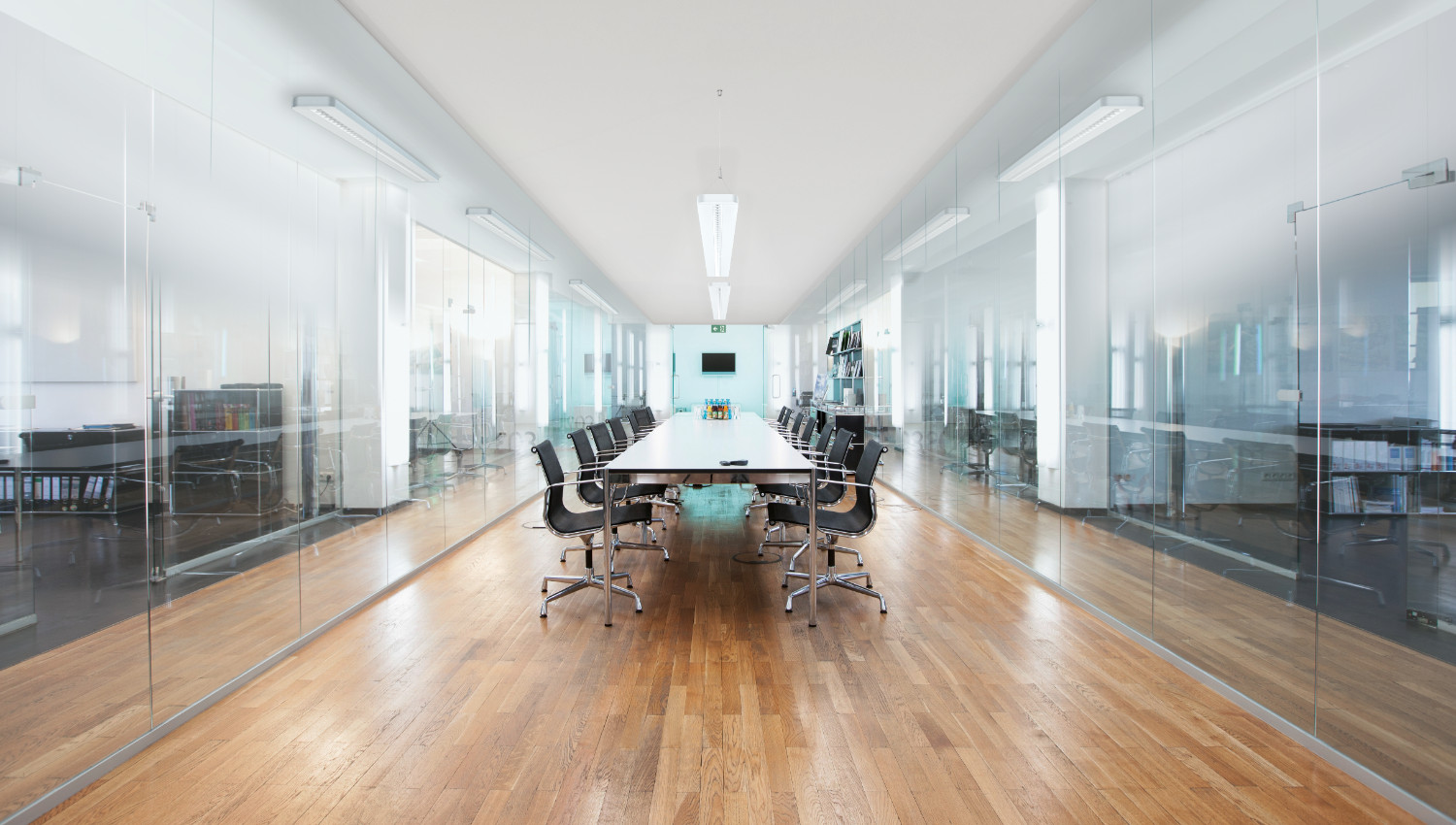
When upgrading or designing a workspace's lighting, a decision you'll need to make is whether to go with direct or indirect lighting. Rather than illumination, lighting significantly impacts productivity, energy consumption, and overall workplace comfort.
Each type has its strengths and trade-offs depending on the space layout, ceiling height, aesthetics, and task requirements. We will explore the key differences between direct vs. indirect lighting in this post, help you have a better understanding of when to use each, and how they affect a commercial space's performance.
Direct lighting is when a light source shines, focused in a specific direction. This lighting is used to highlight a small area, providing higher illumination to the task area. The light falls downwards, creating a gathering point in the center. For example, downlight is a very typical direct light since it falls downwards, creating a gathering point in the center.
Indirect lighting directs light upward to reflect off the ceiling and spread even lighting in a wide space. It produces soft illumination to enhance comfort and creates a more welcoming environment.
It is used in the places that need to improve focus and reduce eye strain. Common solutions include indirect natural sunlight, linear uplight fixtures, and architectural cove lighting.
Direct light provides intense lighting for supporting task-oriented activities or areas, helping to accomplish specific tasks, such as product display, security lighting, warehouse lighting, hospital operating rooms, etc.
Moreover, museums, art exhibitions, theatrical performances, and shops also use direct light to enhance and focus our attention on a certain point or product. Track lights and spotlights are great for this purpose. Overall, direct light is ideal for functional and decorative purposes.
Indirect lighting can illuminate a room more evenly and smoothly than direct lighting, and at the same time, it does not produce a sharp contrast of light and shadow with directional light. It makes the space feel light, warm, and welcoming, which is easier on the eyes. In workplaces like offices, schools, warehouses, or hospital consultation rooms, indirect lighting helps to maintain long-term focus and concentration.
Indirect lighting can be created in various ways. It can create the effect of indirect lighting with the help of an LED Tube or LED light strips placed on the wall. As its light is reflected by walls and ceilings, it can shine in all directions with just one bulb.
Direct lighting has the disadvantages of uneven lighting distribution and glare, which may cause visual discomfort and distraction. While used in visual screens, computer monitors, or glass shelving displays, it often produces reflective glare, which will add eye strain to the viewers.
Indirect luminaires require more reflected lumens to achieve the same task-level illumination as direct lighting fixtures. In large-scale applications, this will cause higher energy consumption and increased costs compared to direct lighting.
FOLLOW US ON:


